Jarvis Disputes

The end of the chargeback scavenger hunt.

Every dispute used to mean a deadline-driven scavenger hunt: the agreement in one system, the payment in another, the sales call in Zoom, the messages in Slack and email, the delivery records in the CRM. Jarvis Disputes turns that mess into a monitored, evidence-backed operating process.

Jared Laurence, The Modern Success. A 37-second client recording.

themodernsuccess.com

The record

What changed when the process got an owner

Built and run inside one coaching business. The records reviewed already showed more than $47,000 in dispute losses, and the exports were incomplete.

27.8% to 62.5%
Case win rate, before and after

In the dated records: the historical sample won 5 of 18. The dated decisions after the March 2026 launch won 5 of 8, and the three losses were all inherited cases.

42% to 87%
Share of disputed dollars won or protected

On known-dollar dated outcomes: $13,184 won or protected against $1,957.60 lost after launch.

8+ wins
Documented in the current records

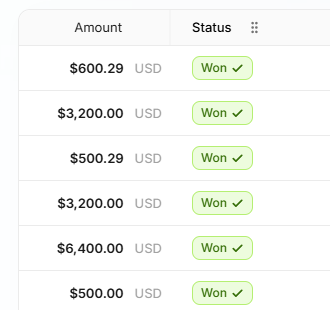
Including six priced wins totaling $14,400.58, with another $600.29 under review. Records are incomplete, so these are minimums.
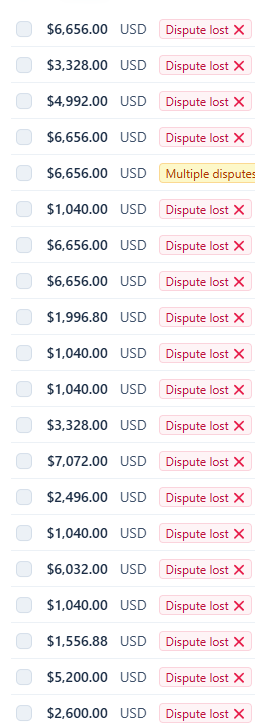
Processor dashboard list of disputes marked lost, amounts from $1,040 to $7,072
Before. Losses stacked in the processor dashboard. The visible history already exceeded $47,000, and the exports were incomplete.
Processor dashboard list of six disputes marked won, totaling $14,400.58
After launch. The six priced wins in the current dashboard, $14,400.58 total. Customer columns cropped.

Figures come from the documented sample in one business, not a lifetime universal rate. Won or protected means disputed dollars retained, not necessarily new cash deposited.

The system

Nine stages, one owner, no scavenger hunt

  1. Monitor every case. New, needs-response, approaching deadline, under review, won, lost. Nothing depends on somebody remembering to check a dashboard.
  2. Alert the right people. Who disputed, how much, why, when the response is due, what evidence is missing, who needs to act. A seven-day warning and a 24-hour warning. No noise between.
  3. Retrieve the whole customer record. Agreement, payment history, sales-call recording and transcript, messages, onboarding, attendance, community activity, internal notes.
  4. Build the chronology. Sale, agreement, payment, onboarding, delivery, engagement, complaint, dispute. A timeline, not a pile of unrelated screenshots.
  5. Assess the case honestly. Including the evidence that weakens the case. The system is allowed to say the evidence does not support the preferred story.
  6. Assemble the evidence package. Case summary, factual response, exhibit index, and the organized folder a reviewer can actually check.
  7. Human review before submission. A responsible person confirms the facts, removes anything unsupported, and submits. AI-assisted preparation, not autonomous filing.
  8. Record the outcome. Won or lost, what evidence was included, what was missing, what the processor said.
  9. Feed the lesson upstream. Recurring findings update contracts, checkout disclosures, onboarding, CRM logging, and fulfillment documentation. The dispute starts long before the chargeback notification.
Case study

Two disputes in, two wins out

A customer disputed two separate $3,296 installments as Product Unacceptable: $6,592 in disputed principal. The claim was that the product was not delivered as described.

The system reconstructed the relationship: a completed signed agreement, a 167-minute sales-call recording and transcript, same-day onboarding, platform and community access, roughly ten confirmed coaching sessions across three different coaches over several months, and the customer's own messages asking for help and applying the coaching. The dispute was filed shortly after the customer went unresponsive.

The winning argument was not that the contract said no refunds. The case became strong because the evidence showed months of actual access, coaching, communication, and voluntary participation.

Both disputes were won: $3,296 closed May 22, 2026, and $3,296 closed May 26, 2026. Both were investigated and packaged fully under the system.

The principle

The system must be allowed to say the case is weak

An assistant that agrees with every case you want to fight protects nobody. Jarvis identifies missing evidence, contradictory messages, and contract language that does not match the delivery history, and it can recommend narrowing or conceding part of a case. A loss produces a postmortem: which evidence was missing, and which upstream process has to change.

That makes the dispute system an operations diagnostic. Recurring dispute findings expose problems in sales promises, onboarding, recordkeeping, and fulfillment documentation, which is exactly the territory the audit works in.

Dispute evidence operations

For service businesses tired of rebuilding every case from scratch

High-ticket coaching, agencies, memberships, done-for-you services: businesses whose delivery records live across several systems. If disputes keep arriving and every one becomes an emergency, this is the conversation to have.

Book a call

Jarvis Disputes is AI-assisted dispute preparation with required human review. It is not legal advice, it does not file cases autonomously, and no outcome is guaranteed.